After a car crash in North Carolina, many people want to know what evidence they actually need to prove a claim. That question comes up whether the collision happened in Raleigh, Charlotte, Wilmington, or anywhere else across the state.
You usually need proof of three big things: how the crash happened, what injuries you suffered, and what the crash has cost you. The sections below walk through those three proof buckets and explain how to get key reports and records under North Carolina law. First, here is a quick overview of the types of evidence that usually make or break a North Carolina car accident claim.
The Evidence That Usually Makes or Breaks a North Carolina Car Accident Claim
To build a strong North Carolina car accident claim, you generally need evidence that shows three things clearly: how the crash happened, what injuries you have and when your symptoms started, and what the crash has cost you in money, time off work, and daily life changes. Together, these categories support fault, injuries, and damages in your car accident claim and give context to the crash report.
The three proof buckets:
- Fault and liability: crash report, photos and video, witness statements, and sometimes digital data
- Injuries and causation: medical records, imaging, diagnoses, and a clear treatment timeline
- Damages: medical bills, wage proof, repair estimates, and out-of-pocket receipts
Insurance companies in North Carolina often start by asking for a few key items from each of these categories.
What Evidence Do Insurance Companies Usually Want First in North Carolina?
North Carolina insurance companies usually ask for a core set of documents early in the claim so they can decide how to handle it.
Common early requests from insurers include:
- Fault evidence: crash report number and a copy of the DMV-349 police report, plus a basic description of what happened
- Injury evidence: initial ER or urgent care records, any follow-up notes, and a list of your medical providers
- Damages evidence: photos of vehicle damage, a repair estimate or total loss letter, basic wage documentation such as recent pay stubs or employer contact information, and any initial medical bills
From there, the strength of your claim depends on how clearly you can prove who caused the crash, what injuries the collision caused, and what those injuries have cost you.
Evidence That Helps Prove Fault in a North Carolina Car Accident
Fault evidence shows how the crash actually happened and who caused it. In North Carolina, this is particularly important because contributory negligence can bar recovery if an insurer or jury believes you were even slightly at fault. That makes clear, consistent fault evidence critical.
Key fault evidence in North Carolina includes:
- DMV-349 crash report and any supplemental police narrative or diagram
- Photos and video showing vehicle positions, damage, skid marks, debris, traffic signals, road signs, and weather or lighting
- Contact information and statements from independent witnesses
- Dashcam or traffic camera footage if it can be obtained
- Event data recorder (black box) information in serious or disputed crashes
- Cell phone records if distracted driving is suspected
This fault evidence is what adjusters and, if needed, courts use to decide who was responsible and to test contributory negligence arguments. Some of the most important fault evidence is collected in the minutes right after a crash.
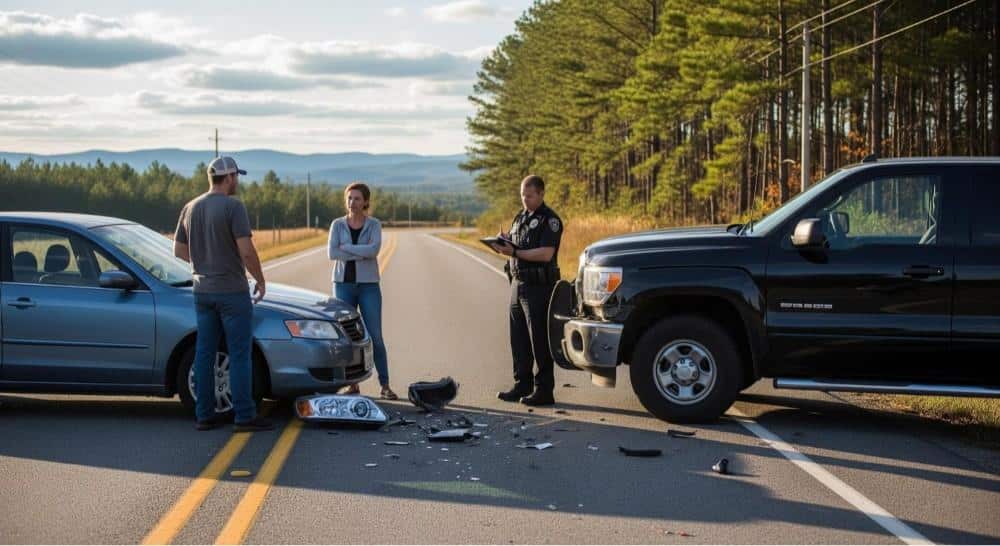
What Should You Collect at the Crash Scene in Raleigh, Charlotte, or Wilmington?
If it is safe to do so, the best time to collect fault evidence is at the scene, before vehicles are moved and memories fade.
Helpful scene evidence in North Carolina includes:
- Photos of all vehicles from multiple angles, including close-ups and wide shots
- Photos of skid marks, debris, lane markings, stop signs, and traffic lights, whether the crash is on I-40 near Raleigh, I-85 through Charlotte, or busy routes into Wilmington
- Photos of any visible injuries such as cuts, bruises, or swelling
- Names, phone numbers, and email addresses for independent witnesses
- Driver’s license, plate number, and insurance details for all drivers
- The name of the responding agency, such as Raleigh Police Department, Charlotte-Mecklenburg Police Department, Wilmington Police Department, or the North Carolina State Highway Patrol
Even a few photos taken quickly on a phone can later make a big difference. One of the most important pieces of fault evidence is the official crash report.
Do I Need a Police Report to File a Car Accident Claim in North Carolina?
You can technically make a claim without a police report, but in North Carolina, a DMV-349 crash report is often a central piece of evidence that insurers and lawyers use to evaluate fault. The report identifies the drivers, lists basic facts, and includes the officer’s diagram and coded findings.
State law requires reportable crashes involving injury, death, or at least a minimum level of property damage to be reported to law enforcement, and responding officers then prepare a DMV-349 under G.S. 20-166.1. If you did not call police at the scene, you should still report the crash as soon as possible and document everything you can through photos, notes, and witness information.
How Does Contributory Negligence Change What Evidence Matters in North Carolina?
Because North Carolina follows contributory negligence, the other side may try to argue that you share some blame for the wreck. They may claim you were speeding, following too closely, making a careless lane change, or not paying attention. If a jury agrees even slightly, you may be barred from recovery in many situations.
This rule raises the stakes for fault evidence. Detailed photos showing lane markings and signals, accurate crash diagrams, objective black box data, and independent witness accounts can all help clarify what really happened and push back on unfair fault arguments. Once fault is clear, the next question is whether your medical records and symptom history clearly connect your injuries to the crash.
Evidence That Proves Injuries and Links Them to the Crash
Insurance companies in North Carolina care as much about how and when you were treated as they do about what happened at the scene. Medical records are the main way to prove what injuries you suffered and whether they are connected to the crash rather than something else.
Core injury evidence in a North Carolina car accident claim includes:
- EMS, ambulance, or first responder reports from the scene
- ER or urgent care notes from the day of the wreck, including triage notes and discharge summaries
- Records from your primary care doctor and any specialists such as orthopedists, neurologists, or pain management providers
- Imaging reports such as X-rays, CT scans, and MRIs
- Physical therapy, chiropractic, or rehabilitation progress notes
- Prescription records and discharge instructions
- Work restriction notes or disability forms issued by medical providers
Consistency in treatment and symptom reporting is critical. Gaps in care, missed appointments, or conflicting notes can give North Carolina insurers room to argue that your injuries are unrelated to the crash or less serious than you claim. Two common questions are which records to request and how to document pain and limitations between visits.
What Medical Records Should You Request After a North Carolina Car Wreck?
You should request both treatment records and itemized bills so you can prove what care you received and what it cost. In addition to knowing what to request, it helps to know how to request it.
Helpful medical documentation includes:
- EMS or first responder records
- ER or urgent care records, including triage notes and discharge summaries
- Records from your primary care physician and any specialists
- Imaging reports and radiology interpretations
- Physical therapy or rehabilitation progress notes
- Prescription lists and pharmacy printouts
- Work restriction or light-duty notes from providers
You can usually obtain these by contacting the hospital or provider’s records department, signing a HIPAA authorization, and requesting both the medical records and an itemized billing ledger. Your lawyer’s office can often request and organize these records for you.
How Do You Document Pain and Symptoms Between Appointments?
A symptom journal can fill in the gaps between medical visits. It can include dates, pain levels, the parts of your body that hurt, activities you can or cannot do, sleep problems, headaches, dizziness, and how long symptoms last. This can be written on paper, kept in a notebook, or stored in a digital note on your phone.
You can also support your claim by taking periodic photos of visible injuries as they heal and by keeping a calendar of missed work, missed family events, or hobbies you have had to stop. This kind of documentation is particularly helpful in North Carolina, where insurers often scrutinize claims closely and look for any sign that injuries have resolved. After fault and injuries, you also need to show what the crash cost you financially.
Evidence of Damages: Bills, Lost Income, and Out-of-Pocket Costs
Damages evidence covers the financial impact of the crash. This includes the cost of medical care, property damage to your vehicle, time missed from work, and other out-of-pocket expenses such as prescriptions and transportation.
Common damages evidence in North Carolina car accident claims includes:
- Itemized medical bills and Explanation of Benefits statements
- Receipts for prescriptions and medical devices such as braces, crutches, or supports
- Repair estimates, body shop invoices, and total loss valuation documents
- Tow and storage bills
- Rental car or rideshare receipts
- Mileage logs for trips to and from appointments
- Pay stubs, W-2s, or 1099s showing pre-crash income
- Employer letters confirming your job duties, time missed, and income lost
Detailed documentation helps the adjuster or, if needed, a jury see the full picture, not just the medical charges. Two areas people ask about often are wage loss and property damage.
What Proof Do You Need for Lost Wages or Reduced Earning Ability in North Carolina?
Employees can usually prove lost wages with a combination of recent pay stubs, W-2s, and employer records. An employer letter that states your position, pay rate, usual hours, and the days or hours missed because of the crash is especially helpful in a North Carolina claim.
Self-employed people should gather tax returns, invoices, profit and loss statements, and evidence of cancelled jobs or contracts. For long-term or permanent limitations, your lawyer may also work with medical and vocational experts to estimate reduced earning ability in the future.
What Property Damage Evidence Helps Most in a North Carolina Car Accident Claim?
Property damage evidence is important for two reasons. It helps you get fair payment for your vehicle and related costs, and it also supports your injury claim by showing how hard the vehicles were hit.
Useful property damage documentation includes:
- Photos of exterior and interior damage from multiple angles
- Written repair estimates and final repair invoices
- Total loss valuation documents from insurers
- Tow and storage invoices
- Rental car or transportation receipts
- Documentation of pre-crash condition such as maintenance records, mileage, and recent upgrades
Next, you need to know how to get crash reports and records in North Carolina and what mistakes to avoid while you gather and use that evidence.
How to Get Crash Reports and Records in North Carolina and What to Avoid
Part of building your evidence file is learning how to request official records and keep your own copies organized. That includes the DMV-349 crash report, any police supplements, medical records and billing ledgers, and employer documentation. Having these records in your own files makes it easier to respond to insurer requests and to share information with your lawyer.
What you say and when you act also matters. Delays, lost documents, and careless statements can hurt your claim under North Carolina’s strict fault rules. It is easier to protect yourself when you know where to get key records and what topics are risky to discuss with adjusters.
Key records and how to request them in North Carolina:
- DMV-349 crash report through the NCDOT or DMV records portal, or directly from the responding agency
- Police department incident reports or supplemental narratives and diagrams
- Medical records and billing ledgers from hospitals, clinics, and therapy providers
- Employer documentation, including letters and time-off printouts
Three big questions here are how to get your crash report, what not to say to adjusters, and how deadlines affect evidence.
How Do You Get a DMV-349 Crash Report and Why Does It Matter in North Carolina?
You can usually obtain your North Carolina crash report online through the NCDOT or DMV records portal by searching with your name, the date of the crash, and the crash location. You can also contact the responding law enforcement agency, such as the city police department, county sheriff, or State Highway Patrol, and request a copy using the same basic information.
The DMV-349 matters because it includes the officer’s narrative, a diagram of the scene, and coded entries for contributing circumstances. Insurers and lawyers use it as a starting point for assessing fault and contributory negligence arguments. Once you have reports and records, be careful how you talk about them with the insurance company.
What Should You Avoid Saying to the Insurance Adjuster in North Carolina?
Adjusters in North Carolina may ask for a recorded statement early in the process. What you say in that conversation can later be used to argue contributory negligence or to downplay your injuries.
Things to avoid telling an insurance adjuster include:
- Admitting fault or apologizing in a way that sounds like an admission
- Saying “I am fine” shortly after the crash when injuries may not be fully known
- Guessing about your speed, the other driver’s speed, or distances
- Speculating about why the other driver did something or what they saw
- Downplaying symptoms or saying you do not plan to see a doctor
- Agreeing to sign broad releases or authorizations without understanding them
It is safer to stick to basic facts, avoid speculation, and direct detailed questions to your lawyer. It is also wise to talk with an attorney before giving any recorded statement. Finally, you need to understand how much time you have to act and why that matters for evidence.
How Long Do You Have to File, and Why Does That Affect Evidence in North Carolina?
In North Carolina, many car accident injury and property damage lawsuits must be filed within three years of the crash date under G.S. 1-52. Wrongful death claims related to car crashes are generally subject to a two-year deadline from the date of death under G.S. 1-53(4). These are filing deadlines for lawsuits in court, not time limits for calling an insurer.
Waiting until the end of those deadlines makes it harder to gather strong evidence. Witnesses move or forget details, business surveillance video is overwritten, phone and vehicle data may no longer be available, and medical records become harder to reconstruct. Starting to gather documents early and seeking legal advice well before those time limits can significantly improve the quality of your evidence and your chances of a successful North Carolina car accident claim.
Get Help Gathering the Evidence for Your North Carolina Car Accident Claim
If you are unsure whether you have the right evidence for a North Carolina car accident claim, you do not have to sort that out by yourself. Crash reports, photos, medical records, wage documentation, and out-of-pocket receipts all matter under North Carolina’s contributory negligence rules, and missing pieces can give insurers an excuse to deny liability or minimize your injuries. Early legal guidance can help you identify which records you need, request DMV-349 crash reports and medical documentation, organize proof of lost income, and avoid statements to adjusters that can be used against you later.
If you have questions about what evidence you need after a crash in Raleigh, Charlotte, Wilmington, or anywhere in North Carolina, you do not have to guess what will satisfy the insurance company. Call Lanier Law Group at 919-342-1368 or contact us online for a free consultation. We’re ready to review your crash report, medical and employment records, explain how North Carolina rules on evidence and contributory negligence affect your claim, and fight like heavyweights to protect your right to pursue full and fair compensation.