After immediate safety concerns are addressed, focus on gathering key information, documenting the scene, getting prompt medical care, and communicating carefully with insurance companies. Because North Carolina follows a contributory negligence rule, avoid statements that speculate about fault or minimize injuries before you have been evaluated.
Start With Safety and 911 Steps at the Crash Scene
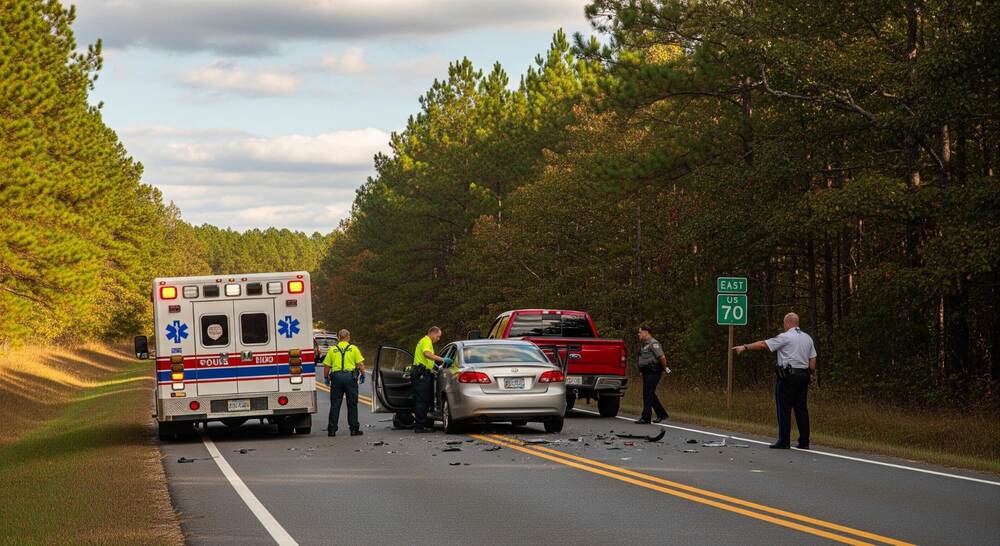
What you do at the scene affects everyone’s safety and can shape the record of what happened. Prioritize preventing further harm, especially on interstates, busy intersections, and rural two-lane roads. If you can move vehicles out of active traffic without creating danger, doing so can reduce the risk of secondary collisions. If anyone may have a serious head, neck, or back injury, or if a vehicle cannot be moved safely, wait for first responders and follow 911 guidance.
Use this North Carolina car accident checklist for immediate safety steps after a crash:
- Move vehicles out of travel lanes if you can do so safely, such as pulling onto a shoulder or into a nearby parking lot.
- Check yourself, your passengers, and people in other vehicles for visible injuries and ask who needs urgent medical attention.
- Call 911 so dispatch can send the appropriate law enforcement agency along with EMS or fire if needed.
- Turn on hazard lights and, if you have them, place flares or reflective triangles to alert oncoming drivers.
- Avoid standing between vehicles or in moving traffic and stay clear of any leaking fuel or smoke.
- Offer simple reassurance to injured people and keep them as still as possible while you wait for first responders.
- Do not move anyone who appears to have a head, neck, or back injury unless they are in immediate danger.
- Follow the instructions of the 911 operator and arriving officers, and do not leave before law enforcement says you may do so.
In North Carolina, many crashes must be reported to law enforcement so an official crash report can be created. When there is any doubt, calling 911 is the safer choice.
What Should I Do in the First Few Minutes After a Car Accident in North Carolina?
In the first few minutes after a crash, focus on triage and clear communication. Address immediate dangers first, then make sure emergency help is on the way, and only then turn to documentation and information exchange once the scene is stable.
When you speak with 911, be ready to share your location as precisely as possible, whether anyone is injured, whether vehicles are blocking lanes, and whether there are hazards such as smoke, leaking fuel, or debris in the roadway.
Key actions include:
- Move your vehicle to a safer spot if it is drivable and safe to do so.
- Check for injuries to yourself, passengers, and others around you.
- Call 911 to report the crash and request police and medical help.
- Turn on hazard lights and, if possible, set out emergency markers.
- Avoid arguing about fault or making detailed roadside statements.
Acting quickly helps first responders reach the scene and creates a clearer record of what happened.
North Carolina Car Accident Reporting Rules You Need To Know
North Carolina has reporting rules that apply to many crashes, especially those involving injuries, significant damage, or traffic hazards. In practical terms, the safest approach is to call 911 when anyone is hurt, when the crash creates a road hazard, or when you are uncertain whether the crash must be reported. A police response also helps ensure there is a crash report for insurance and injury claims.
When Do I Have To Call the Police After a Car Accident in North Carolina?
You must call the police after a car accident in North Carolina when anyone is injured or killed, when there appears to be significant property damage, or when vehicles are blocking traffic and creating a hazard. These situations are treated as crashes that must be reported, and drivers are expected to notify law enforcement without delay.
You should call law enforcement if someone complains of pain or appears disoriented, if vehicles are disabled in a travel lane, or if the crash creates an unsafe situation for other drivers. Having officers respond and create a report supports compliance and provides important documentation.
What Counts as a Reportable Car Accident in North Carolina?
A crash that must be reported in North Carolina generally involves:
- Any crash that causes injury or death
- A crash that causes property damage at or above the amount set by state law
If anyone complains of pain, appears dazed or injured, or if the crash results in a vehicle that cannot be safely driven, treat the crash as reportable. Property damage thresholds can change, and drivers often cannot reliably estimate damage at the scene. When in doubt, notifying law enforcement is the safer choice and helps ensure a crash report exists for your records.
Who Should I Call After a Car Accident in North Carolina?
Drivers inside a city or town typically reach the local police department, while crashes on interstates and many rural roads may involve the county sheriff’s office or the North Carolina Highway Patrol. Dialing 911 is the simplest way to reach the appropriate agency, because dispatch routes calls based on where the crash occurred.
Once you call, follow the operator’s instructions and remain at the scene until officers say you may leave, unless emergency medical care requires transport.
How To Exchange Information and Document Evidence After a North Carolina Car Accident
After immediate safety needs are addressed and law enforcement has been notified, your next priority is to exchange information and document the scene. Evidence collected early is often the most reliable, and it can be difficult or impossible to recreate later. This matters in any claim, and it is especially important in North Carolina where insurers may look for reasons to argue that you share fault.
Try to collect the following while you are still at the scene:
- Full names, addresses, and phone numbers for all drivers
- Driver’s license numbers and issuing states
- Insurance company names, policy numbers, and insured names
- Vehicle makes, models, colors, and license plate numbers
- Photos or video showing vehicle positions, lane markings, and the overall scene from multiple angles
- Photos of vehicle damage up close and with wider context, including any contact points
- Photos of skid marks, debris, traffic signs, signals, and sight lines
- Photos of visible injuries and damaged personal items such as glasses or clothing
- Contact information for passengers and witnesses, including the best number to reach them
- Notes about road conditions, weather, and lighting
- Any available dashcam footage from your vehicle or nearby vehicles
Stay calm and polite during exchanges, but avoid apologizing, guessing about what happened, or making statements about fault. If you are unsure about a detail, it is better to say you are not sure than to speculate.
What Should I Do if the Other Driver Leaves the Scene of a Car Accident?
If the other driver leaves the scene:
- Stay where you are if it is safe.
- Call 911 immediately and provide as much detail as possible about the vehicle, license plate, and direction of travel.
- Do not chase the other driver.
Leaving the scene can be a serious offense, and law enforcement should handle the investigation. Report the collision to your own insurer and ask about uninsured motorist coverage, since hit–and–run crashes are often addressed through that part of a policy.
Get Medical Care After a North Carolina Car Accident
Medical care protects your health and helps establish a clear timeline of symptoms and treatment. Some injuries are obvious right away, while others develop over the next day or two. If you feel pain, dizziness, headaches, stiffness, weakness, or other concerning symptoms, seek evaluation promptly.
When Should I See a Doctor After a Car Accident in North Carolina?
You should see a doctor as soon as possible after a car accident, ideally the same day or within 24 to 72 hours if any symptoms appear. The right setting depends on what you are experiencing. Severe pain, signs of head injury, chest pain, trouble breathing, or neurological symptoms may require emergency care. Less urgent symptoms may be appropriate for urgent care or a primary care visit, depending on availability and medical advice.
Early evaluation:
- Helps diagnose injuries before they worsen
- Creates medical records that connect your condition to the crash
Pushing through pain, especially if you drive long distances or do physical work, can aggravate injuries and complicate recovery.
What Car Accident Injuries Commonly Show Up a Day or Two Later?
Many injuries do not fully show themselves until a day or two after a crash. Common delayed injuries include:
- Whiplash and other neck strains
- Back pain and soft tissue injuries
- Concussions and other head injuries
- Headaches, dizziness, or nausea
- Numbness, tingling, or weakness in arms or legs
If new symptoms appear, see a doctor promptly and describe the crash and the timing of symptoms clearly. Consider noting when symptoms started, what makes them worse, and how they affect daily activities. Clear reporting supports appropriate treatment and accurate documentation.
Protect Your North Carolina Car Accident Claim When Dealing With Insurance Companies
After reporting the collision and addressing medical needs, you will typically notify your insurance company and may be contacted by other insurers. Protecting your claim means providing accurate basic information while avoiding speculation or opinions about fault. In North Carolina, statements that suggest even slight responsibility can become a major dispute later.
Helpful caution points:
- Do not guess about your speed, distances, or who had the right of way.
- Avoid saying you are “fine” or “not really hurt” if you have not been fully evaluated.
- Do not post about the crash, your injuries, or your activities on social media.
- Be cautious about quick settlement offers before you understand the full extent of your injuries.
- Avoid detailed recorded statements to the other driver’s insurer before speaking with a lawyer.
- Keep copies of all letters, emails, claim numbers, and adjuster contact information, and keep a simple log of calls and what was discussed.
Should I Give the Insurance Company a Recorded Statement After a Car Accident?
You generally must cooperate with your own insurance company under your policy, but you can still keep your answers limited to straightforward facts. Focus on when and where the crash occurred, which vehicles were involved, and what happened in broad terms without adding guesses or conclusions.
You are usually not required to give a recorded statement to the other driver’s insurer. Because North Carolina applies contributory negligence, an imprecise answer may be used to argue that you share fault. If you are asked for a detailed recorded statement by another insurer, consider speaking with a North Carolina car accident lawyer before agreeing.
What Mistakes Can Hurt a North Carolina Car Accident Claim?
Common mistakes that can damage a claim include:
- Failing to call police or report a crash that must be reported
- Leaving the scene before exchanging information and documenting evidence
- Failing to gather witness contact information when witnesses are present
- Skipping or delaying medical care or ignoring recommended treatment
- Apologizing or making statements that can be interpreted as admitting fault
- Giving broad recorded statements without legal advice when speaking with another insurer
- Posting photos or comments about the crash or your injuries on social media
- Missing important reporting or lawsuit deadlines
Avoiding these missteps helps preserve your rights and reduces preventable disputes over what happened and what injuries resulted.
Key North Carolina Deadlines and Liability Rules After a Car Accident
North Carolina law sets strict deadlines for filing lawsuits and uses a contributory negligence standard that insurers often rely on when challenging claims. Acting early helps preserve evidence, secure medical records, and obtain witness statements while details are still fresh. Certain situations, including some claims involving government entities, may have additional requirements that make early legal guidance especially important.
How Long Do I Have To File a Lawsuit After a Car Accident in North Carolina?
For most personal injury claims arising from a car accident in North Carolina, you generally have three years from the date of the crash to file a lawsuit in court. For wrongful death claims, the usual timeframe is two years from the date of death.
Deadlines can vary based on the facts of a case, so it is important to speak with a lawyer well before any deadline.
How Does Contributory Negligence Affect My North Carolina Car Accident Case?
Under North Carolina’s contributory negligence rule, if you are found even slightly at fault for a car accident, you may be barred from recovering compensation from another at fault driver. Even a small share of responsibility can be enough.
Insurers may argue contributory negligence based on allegations such as following too closely, failing to keep a proper lookout, making an unsafe lane change, or driving a few miles per hour over the limit. This is why it is important to preserve evidence, communicate carefully, and avoid guesses about fault in early conversations.
How To Get a Copy of Your North Carolina Crash Report
A crash report is often a key document because it records basic facts about the collision, the parties involved, and the responding agency. It may also include a diagram and notes about citations. While it is not the final word on fault, it is frequently requested by insurers and can be helpful when evaluating a claim.
How Do I Get My Car Accident Report From the NCDMV?
To get your crash report through the North Carolina Division of Motor Vehicles, you generally need to:
- Have basic details such as the date and location of the crash and the names of drivers involved
- Request the report using the appropriate crash report request form, often labeled TR-67A or similar
- Submit the form and any required fee by mail or in person, following current instructions
If you can, ask the responding officer at the scene how to obtain the report number or any exchange card information. In some situations, the responding law enforcement agency may also provide guidance on obtaining the report.
What Can I Do if the Police Crash Report Is Not Available Yet?
If the crash report is not yet available:
- Call the responding agency’s records or traffic division to ask about typical processing time and whether a report number has been assigned
- Confirm that you are contacting the correct agency for the roadway and jurisdiction
- Continue documenting everything you can, including photos, your written recollection, medical visits, and insurance correspondence
Reports can take time to finalize, especially after serious or multi vehicle collisions. If you need help locating the report or understanding how it affects your claim, a North Carolina car accident lawyer can assist.
When It Helps To Talk With a North Carolina Car Accident Lawyer
Some crashes can be resolved with straightforward insurance handling, but others raise issues that benefit from legal guidance. A lawyer can help you avoid missteps in communications, evaluate insurance coverage, and address disputes about fault or the value of a claim.
You may want to reach out for legal help if:
- You suffered more than minor soreness and are missing work or struggling with daily activities
- There is a dispute over who caused the crash or an adjuster is trying to assign you partial blame
- The collision involved a commercial truck, rideshare vehicle, government vehicle, or multiple drivers
- The other driver left the scene, was uninsured, or did not have enough insurance
- You are facing quick settlement pressure or confusing paperwork
- You need help obtaining or interpreting the crash report or medical documentation
If you plan to speak with a lawyer, it helps to have the report number if available, photos, witness contact information, insurance claim numbers, and a list of medical visits and missed work days.
Call a North Carolina Car Accident Lawyer
Consider calling a North Carolina personal injury lawyer soon after a crash if you have significant injuries, have missed work, or there is disagreement about what happened. It can also be important to seek guidance early if you feel pressured to give a recorded statement, if the crash involves complicated insurance questions, or if the insurance company is already suggesting that you were partly at fault.
Early legal advice can help you manage communications with insurers, preserve and organize key evidence, evaluate available coverage, and make informed choices about medical treatment, vehicle repairs, and settlement discussions. If you are unsure how to move forward after a serious crash, call Lanier Law Group at 919-342-1368 or contact us online for a free consultation. Our team is ready to review your situation, explain your options, and fight like heavyweights to protect your right to pursue compensation.
