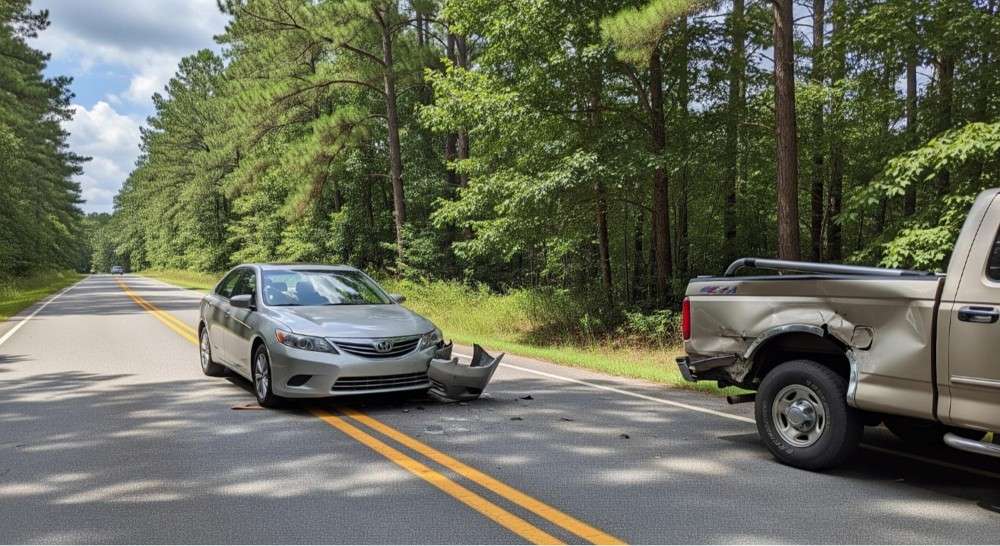
After a car accident with no witnesses in North Carolina, many people worry that because nobody else saw it, the crash will turn into a he-said, she-said situation they cannot win. It can feel especially stressful if the other driver is already blaming you, whether the wreck happened on I-40 near Raleigh, I-85 in Charlotte, I-95 near Fayetteville, Market Street in Wilmington, or on local streets in Greensboro or anywhere across North Carolina.
The good news is that many North Carolina car accident claims are resolved without neutral eyewitnesses. You can still pursue a claim by leaning on the right evidence and by understanding how North Carolina fault rules work. The sections below explain those rules, what evidence can stand in for witnesses, how medical records and crash reports matter, and what steps to take next. Let us start with the core question: can you still pursue a North Carolina claim when there are no witnesses?
Answer-First: Can You Still Win a North Carolina Claim with No Witnesses?
Yes. You can still pursue, and sometimes win, a North Carolina car accident claim with no witnesses, but you will need to rely heavily on objective proof such as crash reports, photos, vehicle damage, digital data, and medical records. Acting quickly before this evidence is lost or overwritten is important, especially in a state with strict contributory negligence rules that insurers often use to their advantage in a no-witness crash. Here’s the big-picture idea:
- Focus on documents and physical evidence, not just your word versus the other driver’s word.
- Preserve objective data fast, including photos, dashcam video, the crash report, and medical records.
- Be careful about what you say to insurers and police, because details and consistency matter more when there are no witnesses.
In the first hour after a no-witness crash, the steps you take can make a big difference.
What Should I Do in the First Hour if Nobody Saw the Crash?
If you are able, these steps will help protect you and your claim in North Carolina:
- Move to a safe location if you can and call 911 for any reportable crash involving injury, death, or serious property damage, as state law requires.
- Ask for medical help if you feel any pain, dizziness, confusion, or other symptoms.
- Note the exact location of the crash, including road names, mile markers, and nearby landmarks.
- Take wide scene photos and close-ups of vehicle damage, skid marks, and road conditions if it is safe to do so.
- Look for nearby cameras such as your own dashcam, store cameras, parking decks, or traffic cameras and note where they are.
- Exchange information with the other driver and get the officer’s name and report number if law enforcement responds.
If you are too injured to do any of this, do not push yourself. Later sections address what to do when you could not gather evidence at the scene.
Once the immediate crisis passes, the next question is what rules you are up against under North Carolina law.
How North Carolina Fault Rules Affect No-Witness Crashes
North Carolina has a fault system that is tougher than most other states. Under contributory negligence, if a jury finds that you were even slightly at fault for causing the crash, you may be barred from recovering damages. Insurers know this and may push harder to deny or discount claims when there are no witnesses to contradict the other driver.
At the same time, North Carolina law puts the burden of proof on different sides for different issues. You must prove that the other driver was negligent and caused your injuries. However, if the defense wants to rely on contributory negligence, they have the burden to prove that your own negligence contributed to the crash. Here’s why this matters in no-witness crashes:
- Insurers may seize on minor statements or inconsistencies to argue you shared fault.
- Objective evidence like photos, reports, and damage patterns carries extra weight.
- Consistent accounts and medical records become central to deciding who is believed.
Two questions come up right away: how contributory negligence changes no-witness cases, and who has to prove it.
How Does Contributory Negligence Change a No-Witness Case in North Carolina?
With no independent witnesses, an insurer may look for any alleged misstep to use against you. That may include slight speeding, not looking carefully before turning, braking late, or rolling through a stop. Even small details can be used to argue contributory negligence and deny payment.
This makes objective proof especially important. Photos showing lane markings and signals, clear images of vehicle positions, skid marks, debris patterns, dashcam footage, and a detailed crash report can all help show that you acted reasonably and that the other driver was primarily at fault. The stronger the physical and documentary evidence, the less room there is for an insurer to rely on speculation.
Who Has the Burden of Proof for Contributory Negligence in North Carolina?
Under G.S. 1-139, the defendant has the burden of proof when asserting contributory negligence. That means the other side must present evidence showing that your own negligence contributed to causing the crash, not just allege it. You still have to prove the other driver’s negligence, but they must bring proof if they want to block your claim using this defense.
With those rules in mind, the next step is understanding what types of evidence can stand in for witness testimony.
Evidence That Can Replace Witness Testimony
When there are no witnesses to a car accident in North Carolina, you need to build your case from objective, verifiable evidence instead of relying on neutral people who saw what happened. Many claims are decided on these records alone. This evidence tends to fall into three main categories:
- Physical scene and roadway evidence, such as photos of lanes, debris, skid marks, and traffic controls
- Vehicle and mechanical evidence, such as damage patterns and event data recorder information in serious crashes
- Digital and third-party data, such as dashcam video, surveillance cameras, and 911 logs
A helpful way to think about these sources is to see what each can show and how to get it quickly.
Key No-Witness Evidence Sources
| Evidence Source | What It Can Show | How to Get It Quickly |
| DMV-349 crash report | Officer narrative, diagram, codes on conditions | Request through NCDMV crash reports or responding agency |
| Scene photos | Lanes, directions of travel, point of impact | Take at the scene or as soon afterward as possible |
| Vehicle damage and EDR | Impact angles, speeds, braking patterns | Photograph at tow yard; EDR via experts in serious cases |
| Dashcam or business video | Signals, lane changes, sequence of events | Preserve your dashcam; contact nearby businesses |
| Medical records | Onset of symptoms and treatment timeline | Request from EMS, hospitals, and clinics |
Here is how that evidence can play out in real North Carolina locations and situations.
What Evidence Can Prove Fault in Raleigh, Charlotte, Wilmington, or Greensboro Without Witnesses?
In a typical urban North Carolina crash at an intersection in Raleigh, Charlotte, Wilmington, or Greensboro, photos and physical evidence can take the place of a bystander’s description. For example, a collision at the I-40 and I-440 area near Raleigh or at an uptown Charlotte intersection can often be explained through careful images alone. Key items that help prove fault include:
- Photos of lanes, turn arrows, stop lines, and signals from each driver’s approach
- Skid marks and debris patterns showing where and how the impact occurred
- Photos of vehicle damage and final resting positions relative to curbs, medians, or landmarks
- Identifying nearby businesses, gas stations, or parking decks that may have cameras facing the roadway
Acting quickly to identify and request any video or records before they are overwritten is important, especially in busy corridors like I-85 through Charlotte, I-40 and I-85 through Greensboro, or streets leading into Wilmington. One of the most powerful tools in a no-witness case is dashcam footage.
Can Dashcam Footage Help if There Were No Witnesses?
Dashcam video can be very valuable in a North Carolina car accident claim without witnesses. It can show what happened in the seconds before and during the crash, including signal colors, sudden lane changes, following distance, and how quickly each driver reacted.
Dashcam footage can help or hurt, depending on what it shows, so you should not delete or overwrite it. The safest approach is to preserve the video and talk with a North Carolina injury lawyer before sending it to any insurer when fault is disputed. Even without cameras, the damage to the vehicles and the roadway itself can tell a detailed story.
How Can Vehicle Damage and Roadway Evidence Tell the Story of the Crash?
Vehicle damage and roadway marks can often show how a crash occurred, even when nobody watched it happen. The location and depth of damage, along with skid marks and debris fields, can help explain which vehicle left its lane or who failed to brake in time. Examples of how physical evidence is interpreted include:
- Longer skid marks can suggest who braked earlier or harder
- Side-impact damage in a specific lane can show which vehicle crossed into another lane
- The debris field often clusters near the actual point of impact
- Gouge marks in the pavement can show where two vehicles made their first contact
In serious North Carolina crashes, lawyers sometimes work with accident reconstruction experts who analyze this data in detail and use it to explain what happened to an adjuster or jury. Beyond proving how the crash happened, you also need to show how it affected you physically.
Medical Evidence Matters More When Fault Is Disputed
When fault is disputed and there are no witnesses, insurers often challenge not only how the crash happened but also whether your injuries are as serious as you say or related to the wreck. In that situation, medical evidence becomes even more important in a North Carolina car accident claim. Here’s a quick list of medical evidence you might have to keep you organized:
- EMS and ambulance reports from the scene
- ER or urgent care notes from the day of the crash
- Primary care and specialist records such as orthopedics, neurology, or pain management
- Imaging reports including X-rays, CT scans, and MRIs
- Physical therapy or rehabilitation progress notes
- Prescription lists and discharge instructions
- Work restriction or disability notes from medical providers
Gaps in treatment, missed follow-ups, or inconsistent reports can give insurers ammunition in no-witness cases. Following up promptly when symptoms develop and documenting your condition in real time is critical. One common worry is what happens if you did not see a doctor right away.
What If I Did Not Go to the Doctor Right Away After a North Carolina Crash?
Delays in seeking medical care can make no-witness cases harder to prove because insurers may argue that your injuries came from something else or were less serious. Many people hope to shake it off and only seek care when pain does not go away, which is understandable but can create challenges.
If you realize you are hurt days later, you can still protect your claim by starting treatment as soon as you can and by telling each provider exactly when and how the crash happened. Keeping a symptom journal that shows when pain started and how it has changed can also help. A lawyer can still work with delayed records but will need to build a stronger evidence foundation to connect your injuries to the crash. Along with medical evidence, the official crash report and other preserved records are central in a no-witness case.
Getting the Official Crash Report and Preserving Proof in North Carolina
In reportable accidents, North Carolina law enforcement must complete a DMV-349 crash report under G.S. 20-166.1 and submit it to the North Carolina Division of Motor Vehicles. That report becomes a key piece of evidence in no-witness crashes because it documents basic facts, identifies drivers, and includes the officer’s diagram and coded observations.
You or your lawyer can order the crash report from the NCDMV crash reports system and use it to confirm details or identify possible errors. Preserving other proof early, including photos, dashcam video, and medical records, helps you compare your own evidence against the report and fill in gaps.
How Do I Order a North Carolina Crash Report and What Is the DMV-349?
The DMV-349 is the standard crash report form that North Carolina law enforcement officers use to document reportable collisions. It lists the drivers, vehicles, location, road conditions, a diagram, and coded factors thought to contribute to the crash.
To get a copy, you usually wait a short period for the report to be filed, then request it through the NCDMV Crash Reports website or by mailing a completed TR-67A request form with payment to the Crash Reports Unit in Raleigh. Many people ask their lawyer to handle this step, along with ordering any supplements. Even with the report in hand, there are certain mistakes that can hurt a no-witness claim.
What Mistakes Hurt No-Witness Claims the Most in North Carolina?
With no witnesses to balance the story, mistakes are magnified because there is less neutral information to rely on.
Common mistakes to avoid include:
- Not calling law enforcement for a reportable crash
- Leaving the scene without exchanging information
- Taking few or no photos of the scene, vehicles, and road conditions
- Repairing or totaling the vehicle before documenting damage
- Giving detailed recorded statements to insurers too early
- Posting about the crash or your injuries on social media
Finally, you may face a situation where the crash report is missing or does not reflect what you remember.
What Should I Do if the North Carolina Crash Report Is Missing or Seems Wrong?
Sometimes crash reports are delayed or include errors. You can follow up with the law enforcement agency to confirm that the report has been filed and to ask if any supplemental information or corrections are planned.
Even if the report is missing or seems wrong, your own evidence still matters. Scene photos, dashcam video, vehicle damage images, medical records, and a clear written account can help fill gaps or challenge a mistaken narrative. An experienced North Carolina car accident lawyer can help present that evidence, request clarification from agencies when appropriate, and argue against unfair use of contributory negligence.
Many no-witness crashes in North Carolina are challenging, but they are not hopeless. With the right combination of physical evidence, medical records, and careful communication, you can still pursue a claim and seek compensation. If you have questions about a no-witness crash anywhere in North Carolina, you can contact Lanier Law Group for a free consultation to review your evidence and discuss your options.
Get Help Proving a No-Witness North Carolina Car Accident Claim
If you were in a North Carolina car accident with no witnesses and the other driver is already blaming you, you do not have to handle that situation alone. In a contributory negligence state, insurers often try to turn a no-witness crash into a credibility contest, using small inconsistencies or missing records to argue that you share fault. Objective proof such as photos, the DMV-349 crash report, vehicle damage, dashcam or business video, and medical records becomes especially important, and early legal guidance can help you identify, preserve, and use that evidence before it disappears.
If you have questions about a no-witness car accident anywhere in North Carolina, including Raleigh, Charlotte, Greensboro, Wilmington, or surrounding communities, you do not have to guess how strong your claim is or whether contributory negligence will be used against you. Call Lanier Law Group at 919-342-1368 or contact us online for a free consultation. We’re ready to review your crash report, photos, medical records, and other available evidence, explain how North Carolina fault rules apply, and fight like heavyweights to help you pursue fair compensation even when no one else saw the crash.
