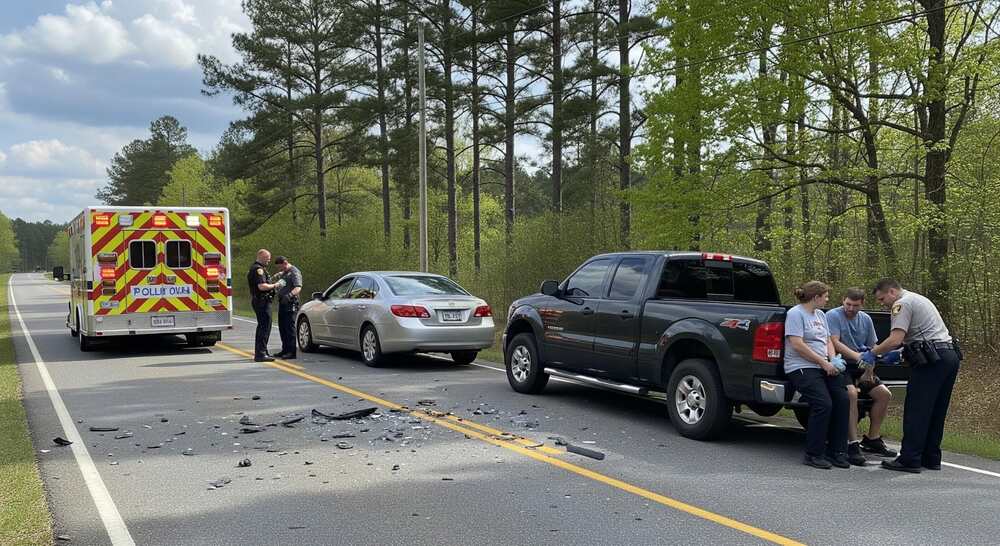
If you have been told you were partially at fault for a car accident in North Carolina, it is normal to feel worried and confused. You may have heard this from the other driver, a police officer, or an insurance adjuster, or you may be replaying the crash and questioning your decisions.
North Carolina follows a pure contributory negligence rule. If the other side proves that you were even slightly at fault and that your conduct contributed to the crash, they may try to use that small share of responsibility to block your claim against the at-fault driver’s liability coverage. Understanding what “partially at fault” means in this state, how insurers use the rule, and how to respond can help you protect yourself.
What ‘Partially at Fault’ Means in North Carolina
When an insurer says you were partially at fault, it is claiming that something you did contributed to the crash. That might include:
- Following another vehicle too closely
- Braking suddenly in a way that was not reasonably necessary
- Looking away from the road or being distracted by a phone, radio, or navigation screen
- Changing lanes without enough space
- Misjudging a left turn across traffic
Under North Carolina contributory negligence, any proven share of fault can prevent recovery from the other driver’s liability coverage, even if that driver clearly did something wrong. Insurers often focus on small details that can be framed as carelessness, such as slight speeding, a momentary distraction, or the position of vehicles after the collision.
Can I Get Compensation if I Was Partly at Fault in North Carolina?
Not every mention of “your fault” ends the case. Adjusters may make early conclusions based on incomplete information, misunderstandings, or one-sided statements. The more important question is what the evidence supports when the crash is reviewed carefully.
Fault disputes are common. Drivers and witnesses often remember events differently, and police reports can omit details that later become important. If an insurer claims you share fault, it does not mean contributory negligence has been proven, and it does not automatically decide your legal rights.
What Does Contributory Negligence Mean for My Claim?
From a claim-handling perspective, contributory negligence gives insurers a strong argument to reduce or deny payment. An adjuster may rely on pieces of information such as:
- The police report, diagrams, and officer notes
- Recorded statements, witness notes, or scene observations
Using these materials, the insurer may argue that you did not use reasonable care and that this contributed to the crash. Even if the case never goes to trial, negotiations are shaped by the possibility that a judge or jury could accept a contributory negligence defense.
Why Shared Fault Is a Bigger Problem in North Carolina Than in Most States
Most states use some form of comparative negligence. In those systems, being partly at fault usually reduces compensation instead of eliminating it entirely. For example, if you were 20 percent at fault and your damages were $100,000, you might still recover $80,000.
North Carolina is different. It follows pure contributory negligence. If a court finds that you were even slightly at fault and that your conduct helped cause the crash, your claim against the other driver can be barred. Because of this, insurers have a strong incentive to raise shared-fault arguments whenever they can.
What Does the “1% Rule” Mean in North Carolina?
The “1 percent rule” is shorthand for pure contributory negligence. It means that if the other side proves you were even slightly at fault and that this contributed to the crash, North Carolina law can bar recovery from that driver’s liability coverage.
For example, imagine another driver makes an unsafe lane change on I-85 near Charlotte and hits your car. If the insurer can show that you were slightly speeding or not fully attentive, it may argue that this small misstep is enough to trigger contributory negligence. Whether that argument succeeds depends on the quality of the evidence and how fault is determined.
Who Decides Fault After a Car Accident in North Carolina?
For insurance purposes, fault is initially decided by adjusters. They commonly review:
- Police reports and crash diagrams
- Driver and witness statements
- Any available video or physical evidence
Those decisions determine how claims are handled in the short term, but they are not final legal rulings. If the case does not settle and a lawsuit is filed, a North Carolina judge or jury ultimately decides who was negligent and whether contributory negligence applies.
Common Ways Insurance Companies Argue You Share Fault
Insurance companies often look for behaviors they can frame as partial fault to support contributory negligence arguments. Even when the other driver clearly did something wrong, an adjuster may focus on your actions and claim that you also contributed.
Adjusters often argue that you:
- Were following too closely or did not leave enough stopping distance
- Failed to keep a proper lookout
- Made an unsafe lane change, turn, or merging decision
They may then combine selected facts from the crash report and your statements to claim you “could have avoided” the collision or “had time to react.” This framing can become the basis for denying the claim or offering a low settlement.
Common shared-fault scenarios include:
- Left-turn crashes where both drivers claim they had the right of way
- Lane-change or merging collisions where each driver says the other moved unsafely
- Rear-end crashes where the following driver blames a sudden stop
- Parking lot back-out incidents where both vehicles were moving
- Failure-to-yield situations at driveways or side streets
- Moments of distraction, such as adjusting the radio or navigation screen
What Should I Say if the Insurance Company Claims I Share Fault?
If an adjuster says you share fault, stay calm and avoid debating on the spot. Focus on what you know from your own observations and avoid guessing about speed, distances, timing, or what the other driver was thinking. You do not have to accept the adjuster’s labels or repeat their shared-fault language.
Helpful boundaries include:
- “I can share the facts I know, but I am not comfortable guessing about fault.”
- “I have not reviewed all information yet, so I do not want to speculate.”
- “Please put your fault reasoning and the evidence you are relying on in writing.”
Before you agree with a conclusion, give a detailed recorded statement, or sign any document that reflects shared fault, it is often wise to talk to a lawyer so you understand the potential impact on your claim.
Can a Parking Lot Crash Turn Into a Shared-Fault Dispute?
Parking lot crashes often involve low speeds, limited lane markings, and unclear right-of-way rules. That combination gives insurers room to argue that both drivers share responsibility, especially if both vehicles were backing out or visibility was limited.
Even a low-speed collision can become a contributory negligence dispute if the insurer believes it can show you contributed. Photos of vehicle positions, lane markings or signs, and contact information for witnesses can be important, even when damage appears minor.
Exceptions That May Still Allow Recovery in North Carolina
North Carolina courts recognize a few legal doctrines that can sometimes soften the impact of contributory negligence. Two that are often discussed are:
- The last clear chance doctrine
- Situations involving willful, wanton, or grossly negligent conduct by the defendant
These doctrines are narrow and highly fact-dependent. They can matter in the right case, but they are not automatic, and they require specific legal elements and strong supporting evidence.
What Is the Last Clear Chance Doctrine in North Carolina?
The last clear chance doctrine applies when:
- You were already in a position of danger
- The other driver knew or should have known about your peril
- The other driver had the time and ability to avoid hitting you
- The other driver failed to act reasonably to avoid the crash
One example is a vehicle stalled in a travel lane when an approaching driver has a clear opportunity to slow down or change lanes safely but does not. Whether last clear chance applies often turns on timing, visibility, and what the other driver reasonably could have done.
Does Reckless Conduct Change the Contributory Negligence Outcome?
In some North Carolina cases, when the defendant’s conduct is more than ordinary negligence, contributory negligence may be treated differently. Willful, wanton, or grossly negligent conduct generally involves a conscious disregard for the safety of others, such as driving while very intoxicated or traveling at extreme speeds through a busy area.
This does not mean every drunk driving crash automatically overcomes contributory negligence. The outcome depends on specific facts and how courts have treated similar conduct. If the other driver’s behavior was especially reckless, legal advice can help you understand how that may affect your claim.
Evidence That Helps When Fault Is Disputed
In a state with the “1 percent rule,” evidence can make a major difference. Clear, objective proof can counter blame shifting and support your version of events.
When fault is disputed, focus on preserving evidence such as:
- Photos and videos of the scene, vehicle positions, skid marks, traffic signals, and road conditions
- Dashcam footage from your vehicle or nearby vehicles, if available
- Names and contact information for neutral witnesses who saw the crash
- The crash report number and any diagrams or officer notes
- Medical records showing when you first reported symptoms and how they developed
- Letters, emails, and text messages from insurers about fault, coverage, and payment decisions
If you have to prioritize, focus first on video, neutral witnesses, early medical documentation, and the crash report.
What Evidence Can Prove I Was Not at Fault?
Some evidence is especially persuasive when you are trying to show that the other driver caused the crash. Examples include:
- Clear video footage showing how the collision occurred
- Neutral witness statements that match your description
- Physical damage patterns consistent with your account of the impact
Consistency also matters. When your description of the crash remains steady, your medical records show prompt reporting of symptoms, and the physical evidence lines up with your account, it becomes harder for an insurer to claim you share fault.
Does the Police Report Decide Fault in North Carolina?
The police report is important, but it does not decide legal fault in North Carolina. It is one piece of evidence that insurers, lawyers, judges, and juries consider. An officer’s opinion can be influential, but it is not binding on a court.
Police reports can also be incomplete. Officers may have limited time at the scene, may not speak to every witness, and may not have access to later evidence such as dashcam footage. If the report seems unfavorable, it does not automatically end your claim, but it may mean additional evidence is needed.
What To Do Next if You Think You Might Share Some Blame in North Carolina
Feeling uncertain about fault after a crash is common, and contributory negligence can make that uncertainty more stressful. You can still take practical steps to protect yourself while fault is being debated.
How to protect yourself from shared-fault denials:
- Write down a detailed account of what happened while it is still fresh
- Preserve photos, videos, and witness contact information
- Get timely medical evaluation for any symptoms and follow through on recommended care
- Avoid guessing about speed, distances, timing, or blame when speaking with insurers
- Ask the insurer to put any shared-fault reasoning in writing
- Keep a file with all insurer communications, bills, and notes from calls
- Consider consulting a North Carolina car accident lawyer before signing releases or accepting quick settlements when fault is disputed
These steps cannot guarantee an outcome, but they can reduce avoidable mistakes and strengthen your position.
Should I Give a Recorded Statement if Fault Is Unclear?
When fault is unclear, a recorded statement can create risk because answers can be replayed or transcribed and used to support a contributory negligence argument. A small guess about speed, a comment that you did not see the other driver, or an attempt to be polite about fault can be reframed as an admission.
You may have obligations to cooperate with your own insurer, but you are generally not required to give a recorded statement to the other driver’s insurer. Before agreeing to a detailed recorded statement, especially when the adjuster is suggesting shared fault, it is often wise to speak with a lawyer.
What Mistakes Make Shared-Fault Claims Harder in North Carolina?
Certain mistakes can make it harder to challenge shared-fault allegations. Common mistakes include:
- Apologizing or accepting blame at the scene without knowing all the facts
- Guessing about speed, distance, or timing when speaking with insurers
- Delaying medical care or skipping recommended treatment
- Signing broad releases or accepting quick, low settlements before you understand your rights
Avoiding these errors helps reduce the material insurers use to build a contributory negligence narrative.
Deadlines That Still Apply While Fault Is Being Disputed in North Carolina
While you and the insurance company are debating fault, the legal clock keeps running. The statute of limitations does not stop just because you are in discussions with an adjuster.
Waiting also makes evidence harder to obtain. Vehicles get repaired or scrapped, witnesses move or forget details, and physical signs at the scene disappear. Delays can affect both your legal deadlines and your ability to prove what happened.
Potential consequences of delay include:
- Evidence that is lost, destroyed, or much harder to obtain
- Witnesses who cannot be found or no longer remember clearly
How Long Do I Have To File a Lawsuit After a North Carolina Car Accident?
In most cases, you have three years from the date of the car accident to file a lawsuit for personal injuries in North Carolina. Wrongful death claims and some special types of cases can involve different time limits. Claims involving certain government entities may also have separate notice requirements.
Because exceptions can apply, it is safer to confirm the deadline that applies to your situation well before it becomes urgent.
Is It Too Late To Take Action if the Crash Was Months Ago?
If the crash happened months ago, it is often not too late to take action, but time may already have affected the available evidence. Vehicles may have been repaired, witnesses may be harder to reach, and details may be less clear than they were shortly after the collision.
Even if time has passed, you can still take steps now. Organize your records, request any missing documents, and get advice about how contributory negligence is being used in the claim. Acting sooner gives you a better chance to strengthen the claim file and address shared-fault arguments.
Talk With a North Carolina Car Accident Lawyer About Shared-Fault Claims
In North Carolina, even a small amount of alleged fault can put your entire claim at risk because of contributory negligence. Insurance companies understand this and often look for any detail they can use to argue that you share responsibility, especially when your injuries are serious or the potential recovery is significant. You do not have to handle those tactics on your own.
You should consider talking with a North Carolina car accident lawyer at Lanier Law Group if any of the following are true:
- You have injuries that required medical care or caused you to miss work
- There are conflicting stories about how the crash happened or fault is disputed
- A commercial vehicle, company car, or multiple vehicles were involved
- The other driver is uninsured or underinsured, raising UM or UIM issues
- The insurer has denied your claim or made a low offer based on shared fault
If you decide to reach out, it helps to gather your crash report, any photos or videos from the scene, dates of your medical visits, and written communications from insurers. The lawyers at Lanier Law Group can review your evidence, explain how North Carolina’s contributory negligence rule may affect your claim, and help you decide on practical next steps.
If you are worried that shared fault could block your recovery, you do not have to face that risk alone. Call Lanier Law Group at 919-342-1368 or contact us online for a free consultation. Our team is ready to review your case, deal with the insurance company, and fight like a heavyweight for the compensation you may be entitled to pursue. Past results do not guarantee future outcomes.