
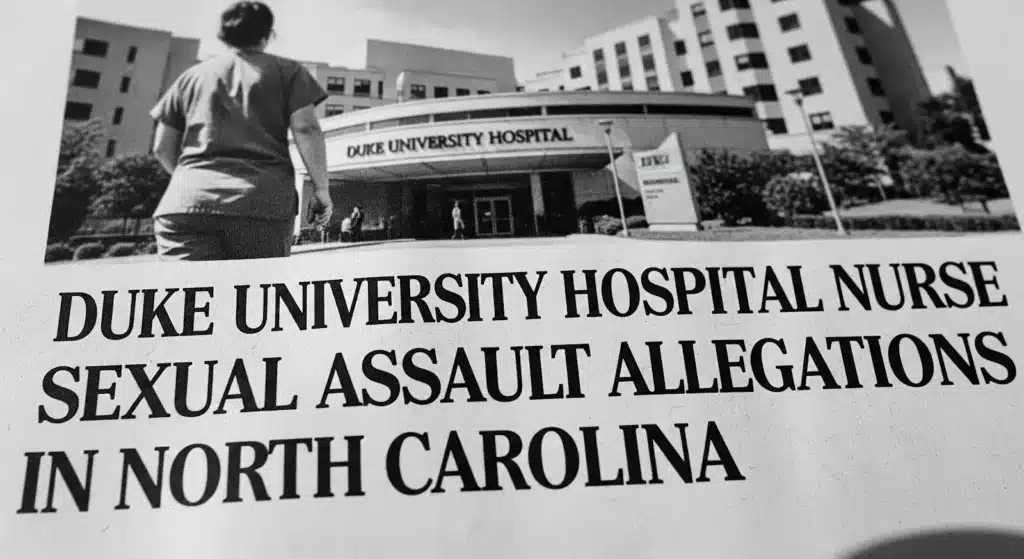
Reports that a nurse at Duke University Hospital has been criminally charged for alleged sexual assaults of patients have raised urgent questions about patient safety in Durham and across North Carolina.
If you or someone you love may have been harmed in a medical setting, it can be hard to separate confirmed information from what is still unfolding and to know where to turn next. While the criminal cases move forward, separate processes through the hospital and the North Carolina Board of Nursing can also shape what happens, and survivors may have civil options beyond the criminal system.
Overview of the Allegations Against the Duke Nurse
Court records describe three separate criminal cases involving nurse Jomil Uy Tugado, who worked at Duke University Hospital in Durham, North Carolina. Prosecutors allege that he sexually assaulted adult patients during medical care, including incidents in which patients were incapacitated and unable to consent.
Duke University campus police arrested Tugado on December 18, 2025. He appeared in court the next day. The cases are ongoing. These charges are allegations, and he is presumed innocent unless and until proven guilty in a court of law.
Timeline of the Reported Incidents and Criminal Charges
Charging documents describe three alleged incidents in 2025 involving different adult patients. Two are alleged to have occurred in May 2025, and one is alleged to have occurred in early December 2025. Publicly available descriptions are limited, but prosecutors allege a similar pattern across the cases: sexual conduct occurring during treatment and presented as part of medical care.
- Late May 2025 Allegation. In late May 2025, prosecutors allege that Tugado told a patient that sexual penetration was required or would be beneficial for the patient’s health. The patient was reportedly incapacitated at the time. Prosecutors allege the conduct was framed as legitimate medical treatment.
- Another May 2025 Allegation. Court records filed in December 2025 describe a separate incident alleged to have occurred later in May 2025 involving a different patient. Prosecutors allege that Tugado sexually assaulted the patient while the patient was incapacitated during treatment at Duke University Hospital.
- Early December 2025 Allegation. In early December 2025, prosecutors allege Tugado engaged in similar conduct with another patient during medical treatment, again with the patient reportedly incapacitated.
Charges Filed in Durham County
Across the three cases, Tugado faces charges that include felony sexual contact or penetration under pretext of medical treatment, felony sex act by a government or private institution employee, and misdemeanor sexual battery. The cases are ongoing, and the charges are allegations.
Duke Health’s Public Response and Patient Safety Statements
Duke Health has publicly acknowledged the allegations through statements reported by local media. According to those reports, Tugado began working for Duke Health in summer 2023. Duke removed him from direct patient care and placed him on administrative leave in early December 2025 after concerns were raised. Duke has also said it is cooperating with law enforcement in the ongoing investigation.
Administrative leave typically means a healthcare worker is removed from patient care while the employer and investigators review what happened. Cooperation with law enforcement often includes preserving records and providing access to information relevant to the investigation.
Summary Suspension of the Nursing License
In addition to the criminal cases, the North Carolina Board of Nursing has taken emergency licensing action. On December 18, 2025, the Board issued an order summarily suspending Tugado’s registered nurse license.
A summary suspension is an emergency measure a licensing board may use when it believes a professional poses an immediate risk to public health, safety, or welfare. A nurse subject to a summary suspension must stop practicing right away. The Board can later hold a hearing to review evidence and decide whether to continue the suspension, impose discipline, or modify its action. Emergency and disciplinary actions may also affect a nurse’s ability to work in other states through shared reporting systems.
What This Means for Victims
For patients and families, a summary suspension can provide some immediate reassurance that the nurse cannot continue treating patients while investigations proceed. It is not a finding of guilt, and it does not answer every question about how the alleged misconduct occurred or whether safeguards failed. However, it can reduce the risk of further harm, and it may also signal that regulators view the allegations as serious enough to require swift action while the criminal case and any internal reviews continue.
When North Carolina Hospitals May Be Civilly Responsible
Criminal cases focus on whether the accused person committed a crime and what punishment may apply. Civil law can also examine whether the hospital or healthcare system failed to protect patients through inadequate safeguards. In practice, civil investigations often look at what the institution knew or should have known, what policies existed on paper, and whether those policies were actually followed in real time on the unit where care occurred.
A Hospital’s Duty To Protect Patients
Hospitals in North Carolina owe patients a duty of reasonable care. That duty includes steps to protect patients from foreseeable harm, especially when patients are sedated, incapacitated, or otherwise unable to advocate for themselves. Civil investigations often examine whether the hospital maintained reasonable hiring, training, supervision, and monitoring practices, and whether policies limited unnecessary unsupervised access to vulnerable patients. They may also look at how the hospital managed patient privacy, staff assignments, bedside access, and escalation procedures when a patient raises a concern. Even basic operational details can matter, such as how staff enter and exit rooms, whether patient interactions are documented appropriately, and whether supervisors routinely audit compliance on higher-risk units.
How Policy and Supervision Gaps Can Enable Abuse
Civil cases often focus on whether safeguards were strong enough and consistently followed. Examples can include inadequate supervision, failure to require chaperones for intimate care when appropriate, weak documentation controls, inconsistent access restrictions, or delayed responses to complaints about boundary violations. Investigators may also examine staffing levels and workflow pressures that create more opportunities for a single staff member to be alone with a patient without a clear clinical reason. When multiple allegations involve similar conduct, civil investigations may ask whether earlier warning signs appeared in incident reports, patient complaints, HR files, peer observations, or supervisor notes, and whether the institution responded promptly and effectively.
Common Civil Theories in North Carolina Hospital Abuse Cases
Depending on the facts, civil claims against a hospital may involve negligent hiring, negligent retention, negligent supervision, or negligent security. Negligent hiring can focus on screening and credentialing, including background checks, references, prior discipline, and competency review. Negligent retention and supervision often examine what the hospital did after any concerns arose, including whether it limited patient contact, increased oversight, or investigated complaints with appropriate urgency. Negligent security can involve failures in monitoring, access control, staffing practices, or other safeguards intended to reduce risk. Each theory ultimately turns on whether the hospital used reasonable care to prevent foreseeable harm and whether lapses in staffing, monitoring, or policy enforcement allowed abuse to occur or continue.
Legal Options for Survivors of Medical Sexual Abuse in North Carolina
If you believe you were sexually assaulted during medical care, it is common to feel unsure about what happened, particularly if you were sedated or if the conduct was presented as part of treatment. Many survivors also feel hesitation about reporting because they worry they will not be believed, they do not want to return to the hospital, or they do not know whether what occurred “counts” as abuse. Those reactions are common, especially when the person involved had medical authority and access to you in a clinical setting. Even if details feel unclear right now, you can still take steps to protect yourself, document concerns, and learn what options are available.
Criminal Cases and Civil Lawsuits Are Separate Paths
Criminal cases are brought by prosecutors and focus on punishment and public safety. The standard of proof is high, and the survivor does not control whether charges are filed or how the case proceeds. The criminal process can also move slowly, and key decisions such as charging, plea negotiations, and trial strategy are handled by the State.
A civil case is brought by the person harmed. It can proceed while a criminal investigation or prosecution is ongoing. The civil standard of proof is different, and a civil case can focus on both the individual accused and any institution whose failures may have contributed to the harm. Civil claims can also be used to obtain information through the legal process, including records, policies, and testimony, which may help clarify what happened and how the facility responded once concerns were raised.
Potential Compensation in North Carolina Medical Sexual Abuse Cases
Civil compensation may include medical expenses, therapy and counseling costs, lost wages, and diminished earning capacity. It can also address non-economic harms such as pain and suffering, emotional distress, loss of enjoyment of life, and impacts on relationships. In the medical abuse context, damages may also reflect the added harm of losing trust in healthcare, fear of future treatment, sleep disruption, panic symptoms, and other long term effects that interfere with work, family life, and daily functioning. In some cases, punitive damages may be available under North Carolina law, depending on the facts and legal requirements.
Time Limits and Why Early Legal Advice Matters
Statutes of limitation apply to civil sexual abuse claims in North Carolina. Deadlines can depend on when the abuse occurred, the survivor’s age at the time, and when the survivor reasonably understood the conduct as abuse. North Carolina has changed some rules in recent years, and the analysis can be fact-specific. Because these deadlines can be technical, it is risky to assume you have plenty of time or, on the other hand, to assume you are out of time. Early legal advice can help preserve evidence, identify where records may exist, and take steps such as sending preservation notices to the hospital before information is lost through routine retention schedules.
Why Survivors Turn to the Lawyers at Lanier Law Group
Survivors who are deciding whether to take legal action after abuse in a medical setting often want two things at the same time: a team that can move quickly on the facts and a process that does not add more stress. The lawyers at Lanier Law Group have represented injured people and survivors of abuse across North Carolina since 1997, including claims involving hospitals and other institutions responsible for patient safety.
Experience With Institutional Abuse Cases in North Carolina
Institutional cases are different from typical injury claims. They can involve layered policies, multiple decision makers, and aggressive defense strategies from large systems and insurers. The lawyers at Lanier Law Group bring decades of experience handling complex cases where accountability may involve both an individual and an institution. When a case needs to be litigated, the firm is prepared to push forward and take the case to trial when that is the right path.
Resources That Strengthen Investigations
Strong cases start with strong investigations. The lawyers at Lanier Law Group use a team approach that includes investigators and dedicated support staff to help gather records, identify witnesses, and organize evidence. That structure matters in cases where key information may be spread across medical records, staffing logs, internal reports, and institutional policies. The team can also work with appropriate experts when needed, and it can take early steps to preserve evidence before it is lost through routine retention schedules.
Statewide Reach and Local Accessibility
Lanier Law Group maintains offices across North Carolina, including Asheville, Burlington, Charlotte, Durham, Fayetteville, Greensboro, Greenville, Raleigh, and Wilmington. That statewide presence makes it easier for you to get support close to home and helps the legal team stay familiar with local courts and procedures across the state. It also reduces logistical barriers when your case involves events, witnesses, or records tied to a specific community.
Availability and Language Access
Many survivors do not feel ready to talk during business hours, and questions can come up at unpredictable times. The firm offers a 24/7 intake line, with support in English and Spanish, so you can reach someone when you are ready. That accessibility can be especially important when you are trying to document what happened, understand your options, or decide what step to take next.
Fees and Consultation
You can speak with the firm through a free, confidential consultation. Cases are handled on a contingency fee basis, which means you do not owe attorney’s fees unless compensation is recovered through a settlement or verdict. This structure is designed to reduce financial barriers and help you seek legal advice without added pressure.
Support and Guidance Throughout the Process
From the first conversation forward, the focus is on clarity and steadiness. The legal team can help you understand your options, communicate with the hospital or other institutions involved, and take practical steps to protect your case, including sending preservation notices for records and other evidence. You stay informed in plain language about what to expect, what decisions may come next, and how the process can move forward while respecting what you have been through.
Frequently Asked Questions About Hospital Sexual Abuse Cases in North Carolina
What Should You Do If You Believe You Were Sexually Assaulted During Medical Treatment?
Your safety comes first. If you can, move to a safe place and consider contacting law enforcement or hospital security. You can ask to speak with a supervisor, charge nurse, or patient advocate. If you are comfortable doing so, request that records and potential evidence be preserved, including medical records, staffing logs, and any available video. Many survivors also seek medical care and counseling from providers they trust. When you are ready, speaking with a lawyer can help you understand your rights and next steps.
Can You File a Civil Lawsuit While a Criminal Case Is Pending?
Yes. A civil case can move forward while a criminal investigation or prosecution is ongoing. An attorney can help coordinate timing and protect your rights, especially if criminal proceedings may affect evidence or scheduling.
How Long Do You Have To File a Civil Lawsuit for Sexual Abuse in a North Carolina Hospital?
Deadlines depend on the facts, including when the abuse occurred, the survivor’s age, and when the survivor reasonably recognized the conduct as abuse. Because statutes of limitation can be technical and fact specific, it is wise to get legal advice rather than assume you are out of time.
What Evidence Can Help in a Hospital Sexual Abuse Case?
Evidence may include medical records, nursing notes, staffing schedules, internal incident reports, security footage, and communications between staff. Witness accounts can also matter. When multiple reports involve similar allegations, patterns may become clearer. A lawyer can help identify likely sources of evidence and take steps to preserve records.
Confidential, Compassionate Help From Lanier Law Group
If you or someone close to you experienced sexual abuse during medical treatment at Duke University Hospital or anywhere else in North Carolina, you do not have to sort through this alone. You deserve support, clear answers, and the time to decide what comes next.
The lawyers at Lanier Law Group offer free, confidential consultations for survivors of sexual abuse and institutional abuse. You can share as much or as little as you feel comfortable sharing, ask questions, and learn what options may be available, with no pressure to move forward before you are ready. To learn more, call 919-342-1368 or reach out to us online and schedule your free consultation today.
