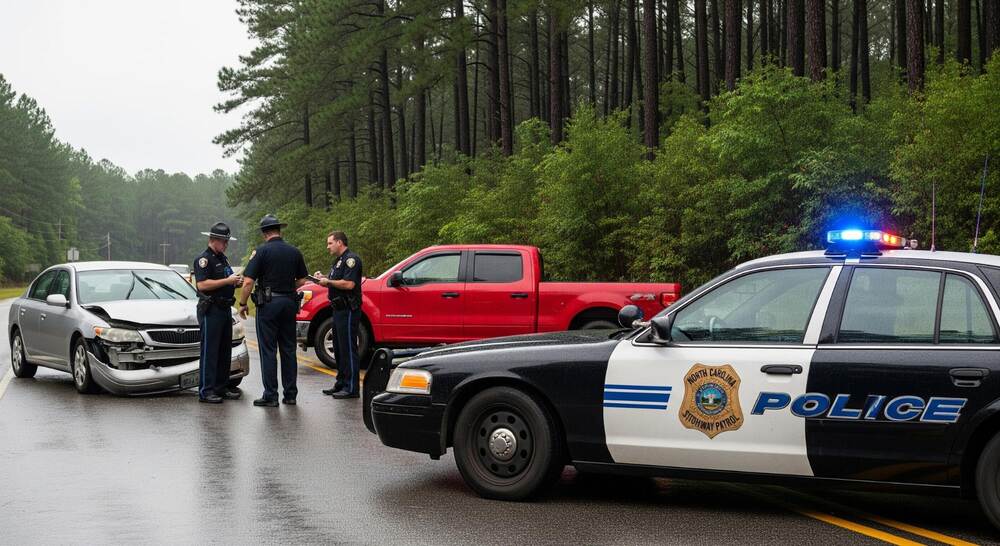
A low-speed fender bender on Capital Boulevard in Raleigh, Independence Boulevard in Charlotte, or a neighborhood street anywhere in North Carolina can leave you wondering whether you really need to call the police. The bump felt minor, everyone says they are fine, and both cars still move. At the same time, you may worry about making a mistake that hurts your insurance claim or violates state law. North Carolina’s rules on reportable accidents, the $1,000 property damage threshold, and delayed injuries make that decision more important than it first appears.
Understanding when you must notify law enforcement, when a 911 call is appropriate, and what to do if officers never respond can help you protect both your safety and your future claim. Clear documentation at the scene, even after a “minor” crash, can make a real difference later if an insurer disputes fault, questions your injuries, or tries to use contributory negligence as a reason to deny payment.
The Short Answer on Calling the Police After a Minor Crash in North Carolina
The core rule is simple: you are legally required to notify law enforcement if the crash is “reportable” under North Carolina law, and you are strongly encouraged to call when you are unsure. A crash is usually reportable if anyone is hurt, someone is killed, or there appears to be around $1,000 or more in total property damage on a public road. Because modern repairs and medical issues are easy to underestimate in a low-speed collision, it is usually safer to err on the side of calling.
Should I Call the Police?
Ask yourself these questions:
- Is anyone injured, complaining of pain, dizzy, or confused?
- Is there a hit and run, suspected impairment, or an unsafe scene?
- Does the damage to all vehicles and property combined look like it might be $1,000 or more, even if it seems “minor”?
- Is there a dispute about fault or a driver refuses to share insurance information?
- Did the crash happen on a public road or highway instead of clearly private property?
If you are unsure, call law enforcement. Use 911 if there is danger or possible injuries, and a non-emergency number if the scene is stable. Later in this article, you will see how North Carolina defines a “reportable” crash and what to do if no officer ever comes to the scene.
Do I Have to Call the Police After a Minor Fender Bender in North Carolina?
If a “minor” fender bender in North Carolina is reportable, you must call law enforcement. If it does not meet the reportable triggers, reporting may be optional, but it is still recommended when you are not sure about damage or injuries. The law focuses on injury, death, and the total cost to fix vehicles and property on a public trafficway, not on how gentle the impact felt in the moment.
Calling is strongly recommended because people often underestimate repair costs and do not feel neck or back symptoms until later. A low-speed bump on a city street in Raleigh, Charlotte, or Wilmington can still produce a repair bill that crosses the $1,000 threshold and whiplash-type symptoms that show up the next day.
When Calling Is Strongly Recommended
You should strongly consider calling the police when:
- You are not sure if total damage is under $1,000
- Anyone feels soreness, stiffness, headache, or dizziness
- There is any disagreement about what happened
- The other driver is uncooperative or refuses to share information
- There are hit and run concerns or suspected impairment
Even if everyone feels fine at the scene, how the damage and injuries develop can change quickly.
How Can I Tell if Damage Meets the $1,000 Reporting Threshold?
The $1,000 property damage threshold is easier to hit than most drivers realize, even in low-speed crashes. Modern bumpers, sensors, and paint work are expensive, and damage to more than one vehicle or to roadside property adds up quickly.
Damage Costs That Add Up Fast
Examples of repair items that can quickly push total damage past $1,000 include:
- Repainting and refinishing a bumper or quarter panel
- Replacing bumper covers, grilles, and trim pieces
- Repairing or replacing parking sensors, backup cameras, and wiring
- Alignment work and suspension checks after a curb or wheel impact
- Replacing headlights, taillights, or fog lights with cracked housings
- Fixing broken clips, brackets, and under-body panels
At the scene, you usually cannot see internal damage behind bumper covers or panels. If there is visible damage to both vehicles or you hit a curb, sign, or guardrail, it is safer to treat the crash as potentially reportable and call.
What if I Feel Fine Now but Symptoms Start Later?
Delayed symptoms after a low-speed crash are common. Neck pain, back pain, headaches, dizziness, difficulty concentrating, and tingling in the arms or legs can appear hours or even days after a rear-end crash or side impact that felt minor at the time.
Early documentation helps your insurance claim and your medical providers connect symptoms to the crash. If you report the accident and seek medical evaluation when symptoms begin, you create a clear timeline. That makes it harder for an insurance company to argue your problems came from something else.
If Symptoms Start Later
If you start to notice pain or other symptoms after leaving the scene:
- Schedule a medical evaluation as soon as you notice symptoms
- Tell every provider that the symptoms started after a car crash and give the date
- Keep copies of visit notes, discharge instructions, and prescriptions
- Notify your insurer about the new symptoms and provider visits
Even when the crash seemed minor, clear medical and claim documentation helps protect your case.
What Makes a Crash “Reportable” Under North Carolina Law?
Under North Carolina law, the definition of a “reportable accident” controls when calling law enforcement is legally required. Statutes such as N.C. Gen. Stat. § 20-4.01(33b) and § 20-166.1 describe reportable accidents and the duty to notify law enforcement “immediately, by the quickest means of communication.”
In general, crashes that involve injury, death, or around $1,000 or more in apparent damage on a public trafficway are considered reportable. The detailed triggers are important because they shape both your legal obligations and how insurers view the crash.
What Is a “Reportable Accident” in North Carolina?
A “reportable accident” in North Carolina is any crash involving injury, death, or apparent property damage that meets or exceeds the statutory threshold on a public roadway. Law enforcement officers use the DMV-349 crash report form to record these collisions once they are notified.
Reportable accident triggers usually include:
- At least one person complaining of or showing signs of injury
- Any crash where someone dies
- Crashes where total apparent damage to all vehicles and property is about $1,000 or more
- Crashes that occur on a public trafficway such as a street, highway, or on-ramp
If you cannot tell whether damage is over $1,000 or whether someone might be hurt, it is safest to treat the crash as potentially reportable and call the police.
Does the Rule Change Inside Raleigh, Charlotte, or Wilmington City Limits?
The definition of a reportable accident does not change inside city limits. The same triggers apply statewide, whether you are in Raleigh, Charlotte, Wilmington, Greensboro, Durham, Fayetteville, or a rural county.
What can change is which agency responds:
- City police in larger municipalities
- County sheriff’s offices in some areas
- North Carolina State Highway Patrol on many highways and rural roads
If you call 911 or a non-emergency line, the dispatcher will route your call to the appropriate agency based on your location.
What Does “Immediately Notify Law Enforcement” Mean in Practice?
“Immediately notify law enforcement” generally means calling as soon as you are safely able to do so. If there are injuries, hazards, or a blocked lane, the quickest and safest option is usually 911. If the scene is calm, vehicles are out of traffic, and there are no obvious injuries, a non-emergency number may be appropriate.
If you cannot call from the scene because of safety, injury, or a dead phone, move to a safe location as soon as possible and then report the crash. The key is to use the quickest reasonable method available under the circumstances.
When You Should Call 911 vs a Non-Emergency Line After a Fender Bender
Choosing between 911 and a non-emergency police line is mainly a safety and urgency decision. Both are ways to notify law enforcement, but they are meant for different situations. Documentation from either path can help you later if your insurance claim or injury is disputed.
911 vs Non-Emergency vs No Call
| Option | When to Use | What You Should Say | What Documentation You May Get | Claim Impact |
| 911 | Injuries, hazards, hit and run, or suspected impairment | Describe injuries, hazards, and exact location | Officer response, DMV-349 report, incident or CAD log | Strong record of what happened and who was involved |
| Non-Emergency Police Number | No immediate danger but crash is reportable or disputed | Describe location, damage, and any disagreement | Possible officer response or phone report, incident number | Helpful if fault or damage is later disputed |
| No Call | Clearly non-reportable, truly minimal contact | N/A | No official report; only your own records | Claim can still proceed but relies heavily on your evidence |
Safety-First Steps Before You Call
Before you decide which number to use:
- Check for injuries and call 911 immediately if anyone is hurt
- Move to a safe location if you can do so without causing more danger
- Turn on hazard lights and watch for oncoming traffic
- Avoid arguing or admitting fault at the scene
- Exchange names, contact details, and insurance information if possible
If the situation involves any danger, uncertainty about injuries, or a driver trying to leave, it is better to use 911.
When Should I Call 911 After a Minor Crash in North Carolina?
You should call 911 after a seemingly minor crash in North Carolina whenever there is any sign of danger or immediate risk. Common 911 triggers include:
- Anyone appears injured, complains of pain, or lost consciousness
- A hit and run occurs or a driver is trying to leave without stopping
- You suspect a driver is impaired by alcohol or drugs
- Vehicles are blocking travel lanes or there is a risk of secondary crashes
- There is fire, smoke, or leaking fluids that could be hazardous
- Another driver is aggressive or making you feel unsafe
If any of these apply, 911 is the right choice.
When Should I Use a Non-Emergency Police Number After a Minor Crash?
A non-emergency police number is often a good choice when the scene is safe, there are no obvious injuries, but the crash meets reportable triggers or you anticipate a dispute. This might happen with a low-speed rear-end where cars can be moved but damage may be expensive.
When you call, be ready to describe:
- The exact location and which direction you were traveling
- Whether anyone is complaining of pain or discomfort
- Whether vehicles are in or out of traffic
- Whether there is a disagreement about what happened
The dispatcher can tell you whether an officer will respond or how they want you to proceed.
What Should I Do If the Other Driver Refuses to Share Insurance Information?
If the other driver refuses to share insurance information in North Carolina, you should prioritize safety and documentation. Do not escalate the confrontation, but also do not simply walk away without gathering what you can. Here’s what you should do:
- Calmly ask once more for their name and insurance information
- Photograph their license plate and vehicle from a safe distance
- Note the make, model, and color of the vehicle
- Look for witnesses and ask for their contact details
- Call 911 or the non-emergency line and explain that the other driver will not exchange information
- Notify your insurer as soon as you can and share the details you gathered
Sometimes you call and still do not get an officer. In other cases, you may not have called at all because the crash seemed too minor at the time. The same documentation principles still apply.
What If Police Do Not Come to the Scene or You Did Not Call From the Scene?
In busy periods, during bad weather, or when calls are stacked, an officer may not come to the scene of a minor crash, even if you called. In other situations, you may not have called because the crash seemed too minor or you did not realize it might be reportable.
If no officer responds, your documentation becomes especially important. If police do not come to the scene:
- Exchange names, contact details, and insurance information with the other driver
- Take scene photos and video of vehicles, damage, lane markings, and nearby signs or signals
- Record the date, time, and exact location in a note or phone app
- Get witness contact details if anyone stopped to help or saw the crash
- Seek medical evaluation if you develop any symptoms
- Notify your insurance company and explain that no officer responded
These steps also set you up to file a late report or to request the crash report if an officer did document it elsewhere.
Can I File a Police Report Later in North Carolina?
Whether you can file a report later depends on the law enforcement agency and the facts of your crash. Some departments will create a late report or incident record if you contact them soon after the collision. Others may limit reports to calls made at or near the time of the crash.
The practical step is to call the records office or non-emergency line for the local department and ask what they can do with your information. Be prepared to share basic details and provide any photos or documentation you have. Make sure you have this information ready:
- Date and approximate time of the crash
- Exact or approximate location and road names
- Names and contact information for drivers, if you have them
- Vehicle descriptions and license plates
- Any photos or videos you collected
If an officer did create a crash report, you can usually request a copy.
How Do I Get a Copy of My North Carolina Crash Report?
In a reportable crash, the responding officer often completes a DMV-349 crash report, which becomes part of the official record. That report can help your insurance claim by confirming basic details and listing the parties and vehicles involved.
You can usually request a copy through the North Carolina Division of Motor Vehicles using the TR-67A crash report request form by mail or in person. Individuals typically receive a redacted copy that protects certain personal information. Some organizations can order online, but individuals often must follow the mail or in-person process. Here’s what you’ll need to request the report:
- Date of the crash and approximate time
- Location and county where it happened
- Names of drivers involved
- Name of the responding agency, if you know it
- Crash report number, if an officer gave it to you
If there is no report at all, your own records and evidence become the backbone of the claim.
What Information Should I Gather if No Officer Responds?
If no officer responds, your goal is to build a “proof packet” for insurance that covers fault, injuries, and damages. The more specific and organized your information, the easier it is to explain what happened and why your version should be believed. If you’re able, you should:
- Take wide scene photos showing vehicle positions, lanes, signs, and signals
- Take close-up photos of each vehicle’s damage and any debris or skid marks
- Exchange names, contact details, and insurance information with the other driver
- Collect witness names, phone numbers, and email addresses
- Look for dashcams, business cameras, or doorbell cameras that may have recorded the crash and ask about saving footage
- Keep tow and repair estimates, invoices, and rental or rideshare receipts
- Write down what happened while it is fresh, including directions of travel and weather
- Seek medical evaluation if you notice any pain, dizziness, or other symptoms
Many camera systems overwrite footage quickly, so ask about preserving video as soon as you can.
How Calling the Police Can Affect Insurance and a Future Injury Claim in North Carolina
A police report is not always required for an insurance claim, but it can make disputes easier to resolve. It gives a neutral record of who was there, where it happened, and what an officer observed. When there is no report, insurers may look more closely at your photos, timelines, and medical records, especially in a state like North Carolina that follows contributory negligence.
A police report can:
- Provide neutral basic information about drivers, vehicles, and location
- Include a diagram and narrative that support your account of how the crash happened
- List witnesses and their contact information if any were identified
- Reduce the chances that stories will change later
- Help insurers make coverage decisions and evaluate liability
You can still pursue a claim without a police report, but the process may involve more questions and a heavier focus on your own evidence.
Can I Make an Insurance Claim Without a Police Report in North Carolina?
You can often make an insurance claim without a police report in North Carolina. Many minor crashes, especially on private property, are handled between drivers and insurers without an officer ever coming to the scene.
However, insurers may investigate more heavily and ask for more documentation. When there is no official report to rely on, your photos, witness information, repair estimates, and medical records become more important.
If there is no police report, priority evidence includes:
- Scene and damage photos from multiple angles
- Names and contact details for witnesses
- Repair and tow documentation
- Medical evaluation records and follow-up notes
- Any third-party corroboration such as 911 logs or video
The stronger and more consistent your documentation, the easier it is to explain what happened and why you should be believed.
Why Does Contributory Negligence Make Documentation More Important After a Minor Crash?
North Carolina’s contributory negligence rule means that if an insurer or jury believes you were even slightly at fault, you may be barred from recovering damages. In a minor crash with no report, weak documentation can make it easier for an insurer to claim you share blame or that your injuries are minor.
The practical takeaway is to prioritize independent proof and consistent timelines. Neutral records, photos, and medical notes make it harder for an insurer to rely only on the other driver’s story or assumptions that a low-speed impact could not cause real injuries.
What Injuries Commonly Show Up After “Minor” Crashes?
Many injuries from “minor” crashes do not show up immediately. Hours or days later, you may notice pain or symptoms that you did not expect at the scene. Examples include:
- Neck pain or stiffness consistent with whiplash
- Upper or lower back pain that worsens over time
- Headaches or migraine-like symptoms
- Dizziness, nausea, or trouble concentrating
- Numbness or tingling in arms, hands, legs, or feet
- Shoulder or knee pain from bracing at impact
If you have been in a minor crash anywhere in North Carolina and are unsure whether you should have called the police or how to document what happened, you can reach out to Lanier Law Group for a free consultation. A North Carolina car accident lawyer can help you understand the reporting rules, evaluate your injuries, organize your evidence, and protect your insurance and injury claim under North Carolina law.
Get Help Deciding What to Do After a Minor Crash in North Carolina
If you are unsure whether you handled a minor North Carolina crash the right way or worried that not calling the police hurt your claim, you do not have to sort that out by yourself. Questions about reportable accidents, the $1,000 damage threshold, delayed injuries, and contributory negligence can all affect how insurers respond, even after a low-speed collision.
Early legal guidance can help you understand whether the crash should have been reported, what steps you can still take now, and how to use your photos, repair records, and medical visits to protect a future injury claim.
If you were involved in a minor crash on Capital Boulevard in Raleigh, Independence Boulevard in Charlotte, or any road in Greensboro, Wilmington, Asheville, or anywhere else in North Carolina and you are unsure whether you needed to call the police or how to document what happened, you do not have to make those decisions on your own.
Call Lanier Law Group at 919-342-1368 or contact us online for a free consultation. We’re ready to review your crash details, explain how North Carolina reporting and contributory negligence rules apply, and fight like heavyweights to protect your right to pursue fair compensation if pain or complications surface after what first seemed like a minor wreck.
